Relational visibility makes organizations measurable and actionable.
CONTEXT:
Leadership wanted to strengthen coordination, collaboration, and knowledge sharing across globally distributed teams to align with a major strategic initiative.
Leadership wanted to strengthen coordination, collaboration, and knowledge sharing across globally distributed teams to align with a major strategic initiative.
HIDDEN STRUCTURES:
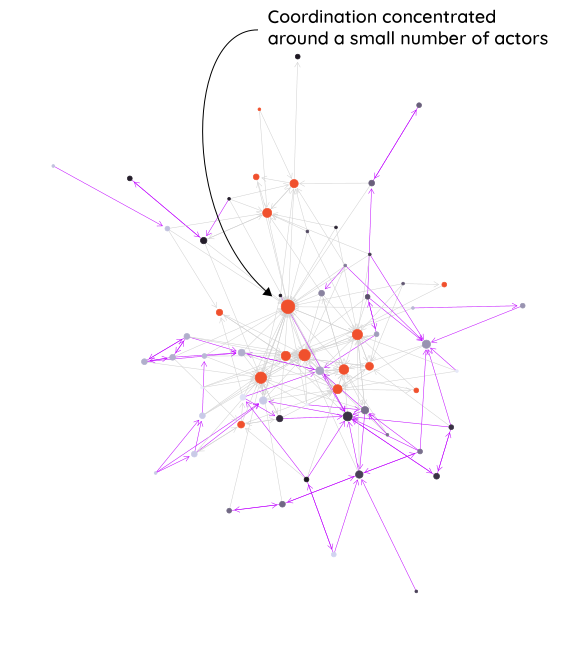
Relational mapping revealed that coordination was highly concentrated around a small number of individuals and teams, limiting cross-functional exchange and creating structural bottlenecks across the organization.
Relational mapping revealed that coordination was highly concentrated around a small number of individuals and teams, limiting cross-functional exchange and creating structural bottlenecks across the organization.
CONTEXT:
Leadership wanted to strengthen coordination, collaboration, and knowledge sharing across globally distributed teams to align with a major strategic initiative.
Leadership wanted to strengthen coordination, collaboration, and knowledge sharing across globally distributed teams to align with a major strategic initiative.
HIDDEN STRUCTURES:
Relational mapping revealed that coordination was highly concentrated around a small number of individuals and teams, limiting cross-functional exchange and creating structural bottlenecks across the organization.
Relational mapping revealed that coordination was highly concentrated around a small number of individuals and teams, limiting cross-functional exchange and creating structural bottlenecks across the organization.
RELATIONAL REDESIGN:
We redesigned the interaction architecture to create intentional cross-functional coordination pathways through colocation structures, facilitated exchanges, and group design.
We redesigned the interaction architecture to create intentional cross-functional coordination pathways through colocation structures, facilitated exchanges, and group design.
TRANSFORMATION:
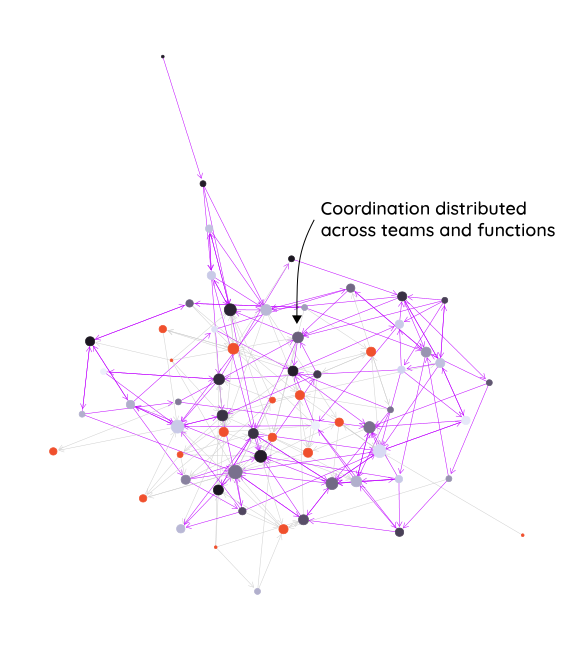
Cross-team collaboration more than doubled following the offsite, while coordination became more distributed and resilient — reducing dependency on centralized hubs and strengthening collaboration across the organization.
Cross-team collaboration more than doubled following the offsite, while coordination became more distributed and resilient — reducing dependency on centralized hubs and strengthening collaboration across the organization.
RELATIONAL REDESIGN:
We redesigned the interaction architecture to create intentional cross-functional coordination pathways through colocation structures, facilitated exchanges, and group design.
We redesigned the interaction architecture to create intentional cross-functional coordination pathways through colocation structures, facilitated exchanges, and group design.
TRANSFORMATION:
Cross-team collaboration more than doubled following the offsite, while coordination became more distributed and resilient — reducing dependency on centralized hubs and strengthening collaboration across the organization.
Cross-team collaboration more than doubled following the offsite, while coordination became more distributed and resilient — reducing dependency on centralized hubs and strengthening collaboration across the organization.